 by
by 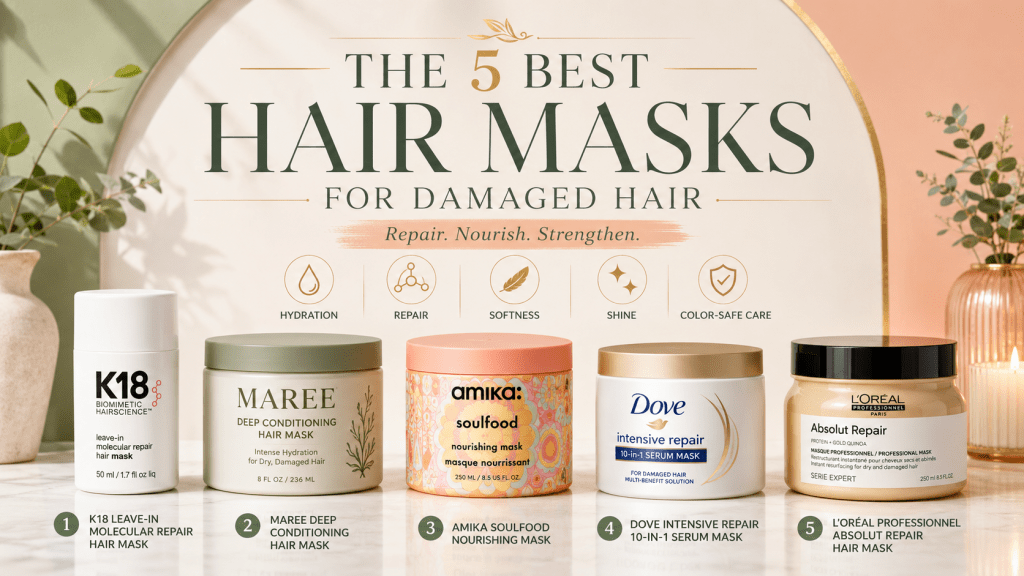
Finding the best hair masks for damaged hair can be difficult because different types of damage need different treatments. Bleached or chemically processed hair may need intensive repair, while dry, curly, or frizzy hair may benefit more from deep conditioning and moisture.
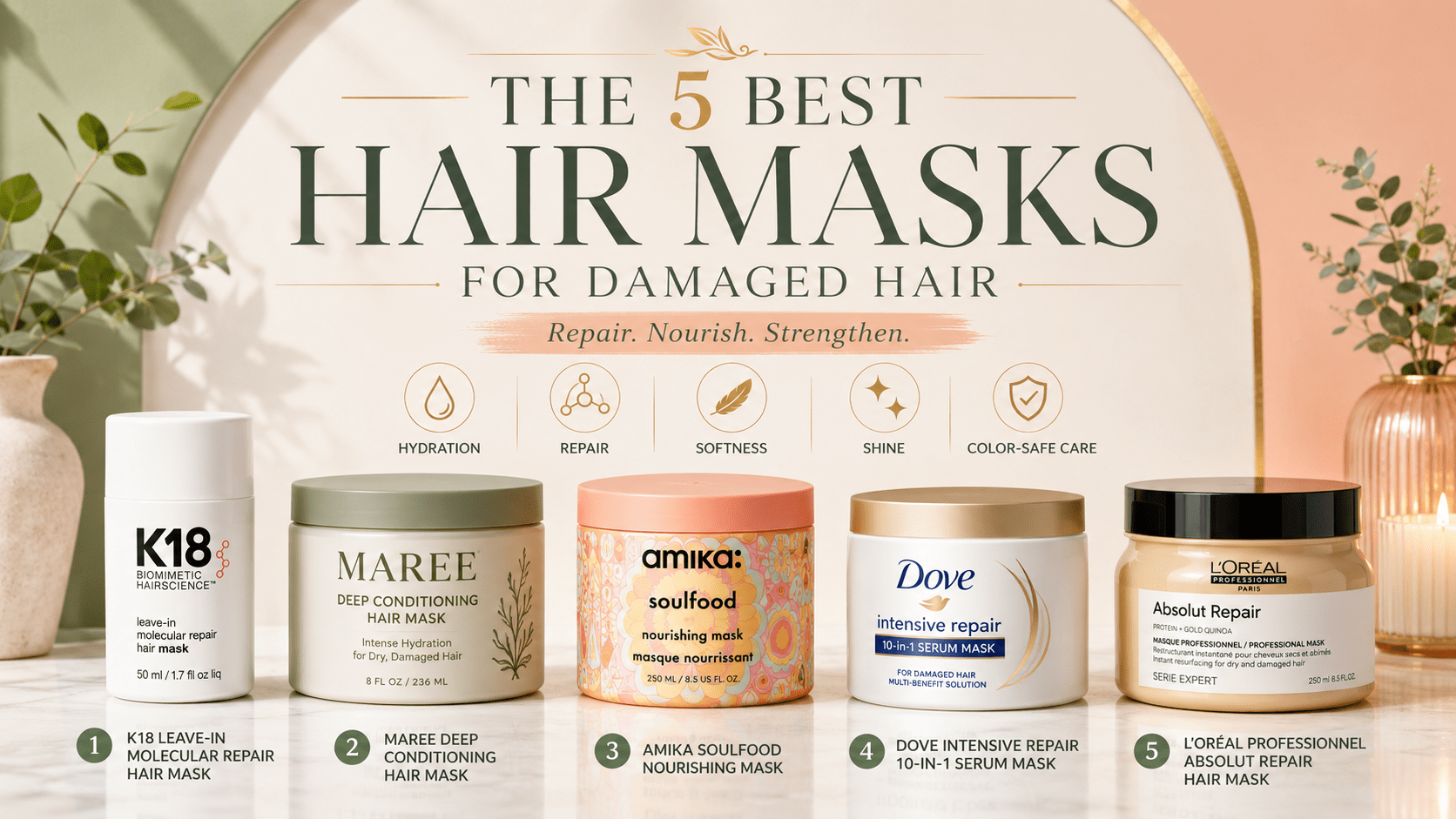
In this guide, we compare five popular hair masks available on Amazon: K18 Leave-In Molecular Repair Hair Mask, MAREE Deep Conditioning Hair Mask, amika Soulfood Nourishing Mask, Dove Intensive Repair 10-in-1 Serum Mask, and L’Oréal Professionnel Absolut Repair Hair Mask.
These products cover premium molecular repair, keratin care, intensive hydration, affordable weekly conditioning, and salon-style protein treatment. This comparison will help you choose the right mask based on your hair type, damage level, routine, and budget.
Quick Comparison of the Best Hair Masks for Damaged Hair
| Product | Best For | Treatment Type | Application Style |
|---|---|---|---|
| K18 Leave-In Molecular Repair Hair Mask | Bleach, color, heat, and chemical damage | Peptide-based leave-in treatment | Leave in after shampooing |
| MAREE Deep Conditioning Hair Mask | Dry, curly, frizzy, and color-treated hair | Keratin conditioning mask | Rinse-out mask |
| amika Soulfood Nourishing Mask | Deep hydration and softness | Moisturizing mask | Rinse-out treatment |
| Dove Intensive Repair 10-in-1 Serum Mask | Affordable weekly repair care | Bio-protein and amino serum mask | Rinse-out mask |
| L’Oréal Professionnel Absolut Repair Mask | Dry, damaged, salon-treated hair | Protein-based salon mask | Rinse-out treatment |
1. K18 Leave-In Molecular Repair Hair Mask
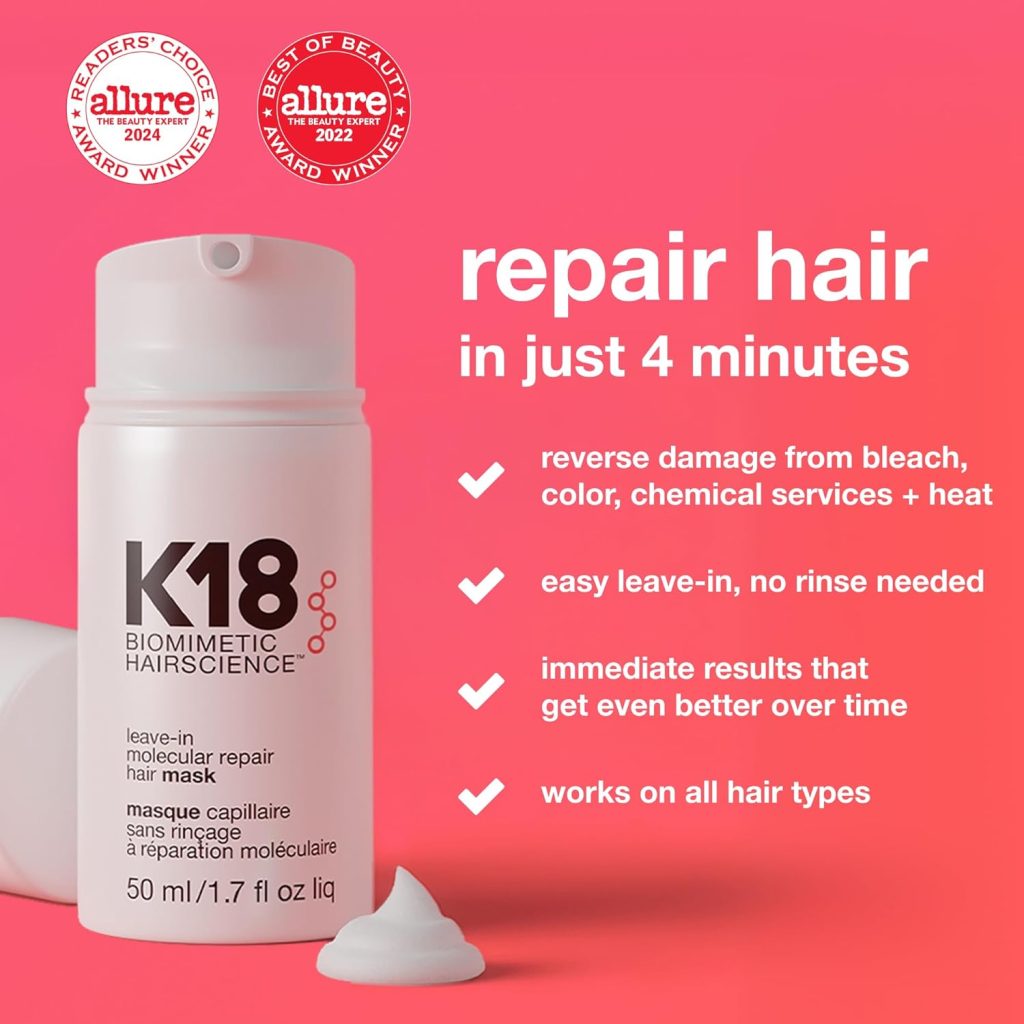
Best overall for severely damaged hair
K18 Leave-In Molecular Repair Hair Mask is the most treatment-focused option in this comparison. It is designed for hair damaged by bleach, coloring, chemical services, and repeated heat styling.
Unlike a traditional deep conditioner, K18 is a leave-in treatment. You shampoo your hair, skip conditioner, apply a small amount to towel-dried hair, and wait four minutes before adding other styling products.
The formula uses K18PEPTIDE, which the brand positions as a molecular-level treatment for damaged hair. This makes it especially appealing for people whose hair feels weak, brittle, rough, or overprocessed.
K18 comes in a much smaller container than the other masks in this guide. However, only a small amount is needed per application. People with fine or short hair may use less than those with long, thick hair.
This is the strongest premium option for people who regularly bleach, color, chemically straighten, or heat-style their hair. It may be unnecessary if your hair only needs occasional moisture.
Pros:
- Designed for bleach, color, chemical, and heat damage
- Leave-in formula saves rinsing time
- Four-minute processing period
- Suitable for different hair types
- Small amount is usually sufficient
- Good option for severely overprocessed hair
Cons:
- More expensive per ounce than traditional masks
- Small container
- Requires skipping conditioner before application
- May not provide the rich, slippery feel of a deep conditioner
- Correct application is important
Best for: Bleached, chemically treated, heat-damaged, brittle, or highly processed hair.
2. MAREE Deep Conditioning Hair Mask
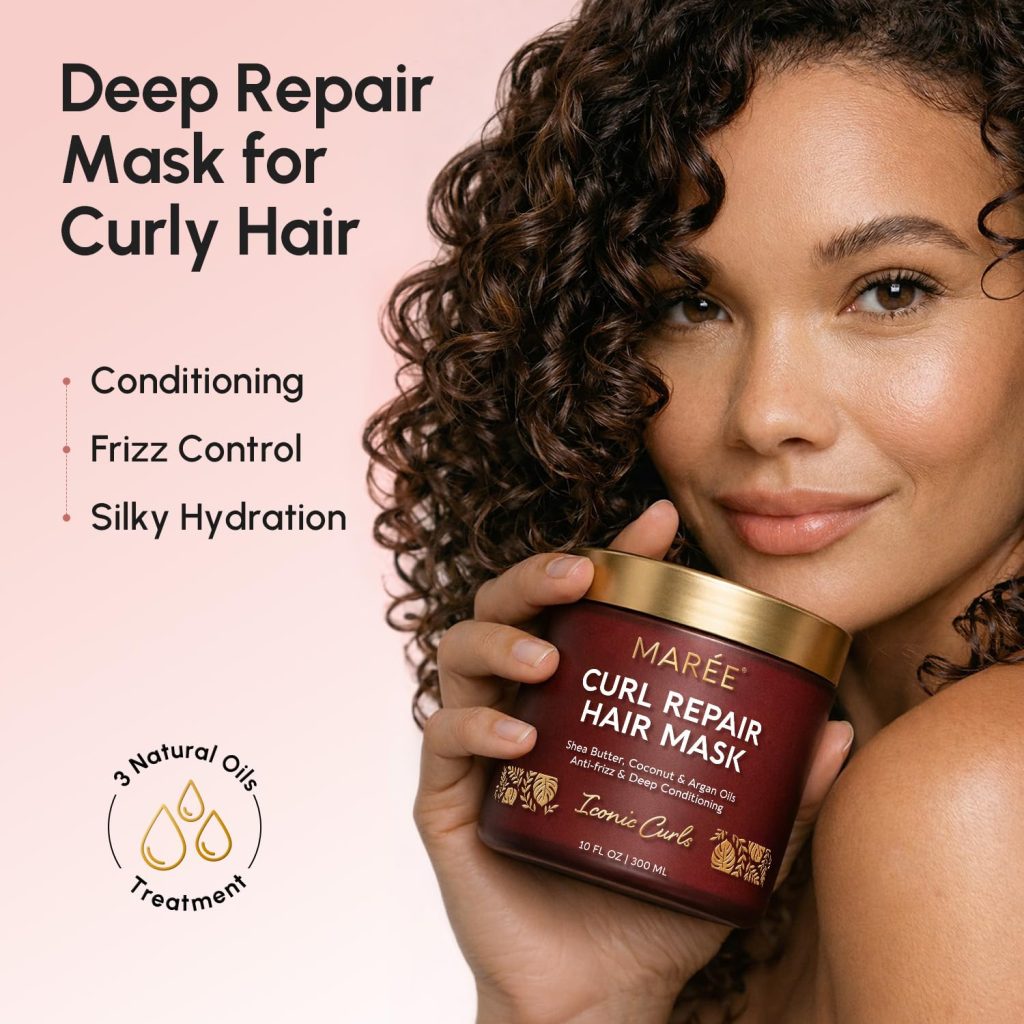
Best for dry, curly, and frizzy hair
MAREE Deep Conditioning Hair Mask is a rinse-out conditioning treatment made for dry, damaged, curly, frizzy, and color-treated hair.
Its product listing highlights keratin, biotin, and coconut oil. The formula is positioned to moisturize the hair, smooth frizz, and improve the appearance of split ends caused by coloring or heat styling.
Compared with K18, MAREE offers a more traditional deep-conditioning experience. It comes in a larger container and is easier to use as a regular weekly moisture treatment.
This may be a better choice if your main concern is dryness, roughness, tangling, or frizz rather than severe chemical damage. Curly and thick hair types may also prefer the richer rinse-out format.
Because keratin-based products may feel heavy on some fine or low-porosity hair, begin with a small amount and adjust based on how your hair responds.
Pros:
- Good for dry, curly, and frizzy hair
- Includes keratin, biotin, and coconut oil
- Large 10-ounce container
- Traditional deep-conditioning format
- Suitable for color-treated hair
- Helps improve softness and manageability
Cons:
- May feel heavy on very fine hair
- Protein-sensitive hair may prefer a moisture-only mask
- Requires rinsing
- Results depend on hair type and frequency of use
Best for: Dry, curly, frizzy, heat-styled, or color-treated hair needing moisture and smoother-looking ends.
3. amika Soulfood Nourishing Mask
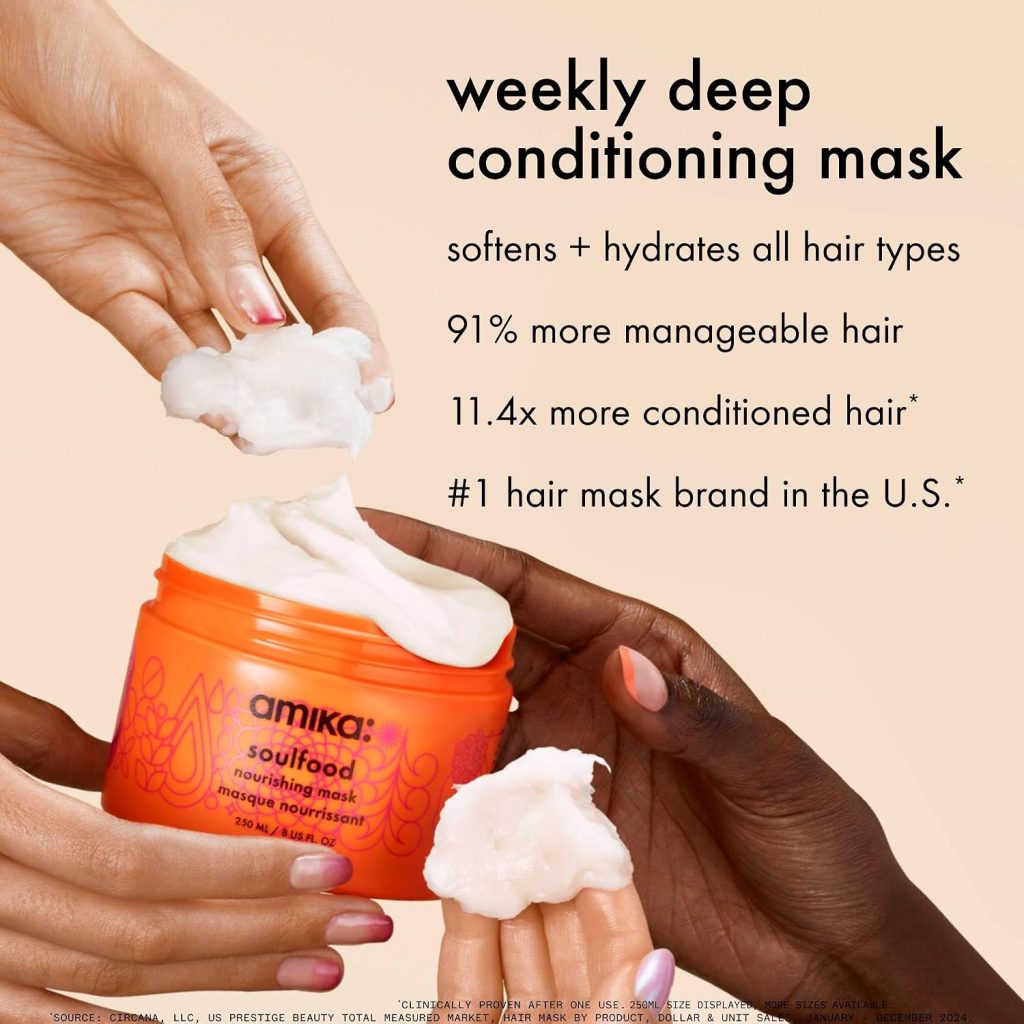
Best nourishing mask for softness and shine
amika Soulfood Nourishing Mask is a rich moisturizing treatment for hair that feels dry, rough, or difficult to manage. The product is designed for all hair types, especially hair needing deep hydration.
The formula includes sea buckthorn and jojoba seed oil. It is also positioned as vegan, cruelty-free, color-safe, and free from sulfates, parabens, phthalates, mineral oil, and petrolatum.
This mask is less focused on intensive structural repair than K18. Its main strengths are moisture, softness, manageability, and shine.
The creamy rinse-out format makes it easy to use in place of conditioner during a weekly wash routine. It can be especially useful for hair that feels dry from weather, styling, frequent washing, or color maintenance.
People who enjoy fragranced hair products may appreciate the salon-like experience. However, anyone sensitive to fragrance should review the ingredient list before purchasing.
Pros:
- Deeply moisturizing formula
- Suitable for all hair types
- Good for softness and shine
- Contains sea buckthorn and jojoba seed oil
- Vegan and cruelty-free positioning
- Color-safe and keratin-safe
- Free from sulfates and parabens
Cons:
- Premium price compared with drugstore masks
- Fragrance may not suit everyone
- Not as targeted toward severe chemical damage as K18
- Rich texture may be too heavy for some fine hair
Best for: Dry, dull, tangled, or rough-feeling hair that needs hydration, softness, and shine.
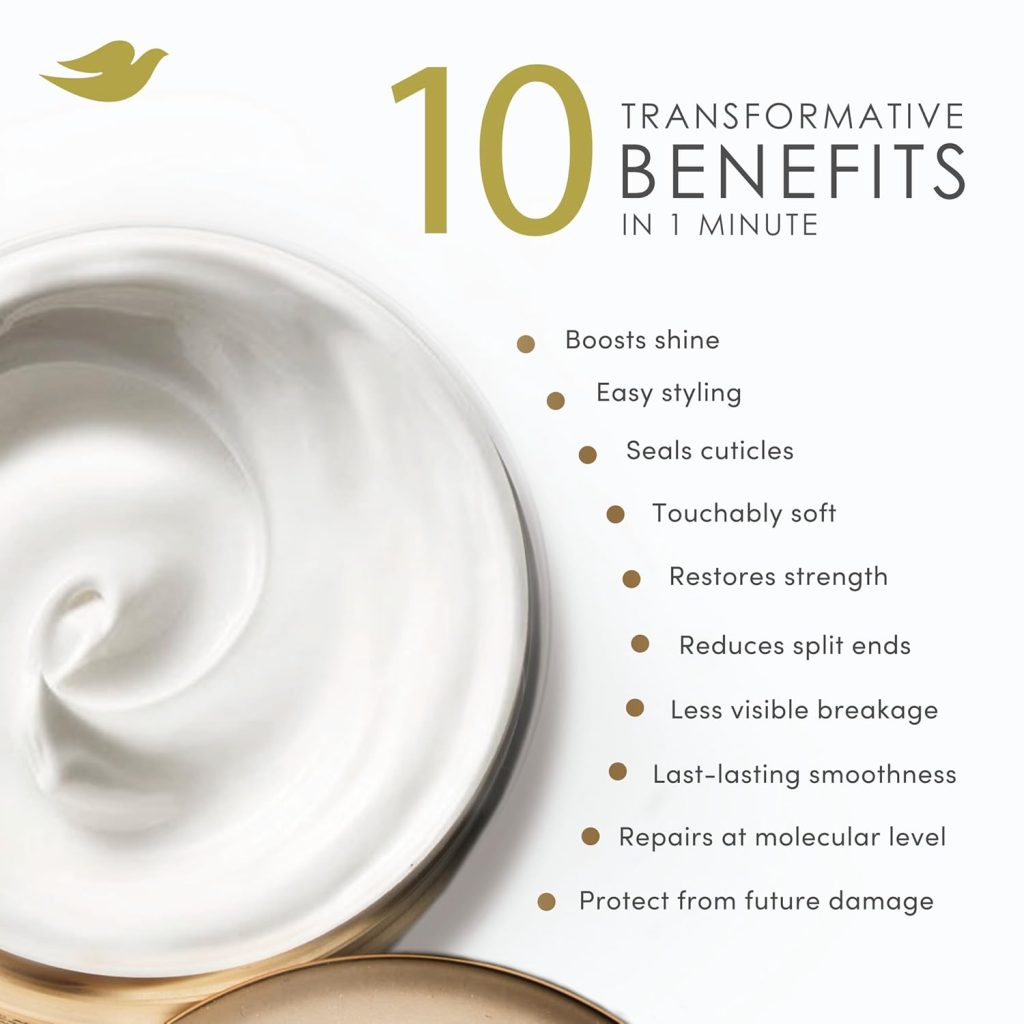
4. Dove Intensive Repair 10-in-1 Serum Mask
Best affordable hair mask
Dove Intensive Repair 10-in-1 Serum Mask is the most budget-friendly option in this comparison. It is designed for damaged hair and uses Dove’s Bio-Protein Care Technology with an amino serum.
The 9.2-ounce container provides considerably more product than K18, making Dove more practical for regular weekly use, long hair, or households where several people use hair treatments.
This mask is a good option if your hair feels dry, frizzy, rough, or weakened by normal styling. It may not provide the same specialized treatment experience as K18 or the salon-style positioning of L’Oréal Professionnel, but it offers strong everyday value.
The rinse-out format is simple. Apply it after shampooing, allow it to sit according to the instructions, and rinse thoroughly.
Dove is best for shoppers who want an affordable step between normal conditioner and a premium repair mask.
Pros:
- Affordable price
- Large 9.2-ounce container
- Designed for damaged hair
- Uses bio-protein care and amino serum positioning
- Easy to add to a weekly wash routine
- Widely recognized brand
Cons:
- Less specialized than premium repair treatments
- May not be intensive enough for severe bleach damage
- Fragrance may not suit everyone
- Can feel rich on very fine hair if overapplied
Best for: Budget-conscious shoppers with dry, rough, frizzy, or moderately damaged hair.
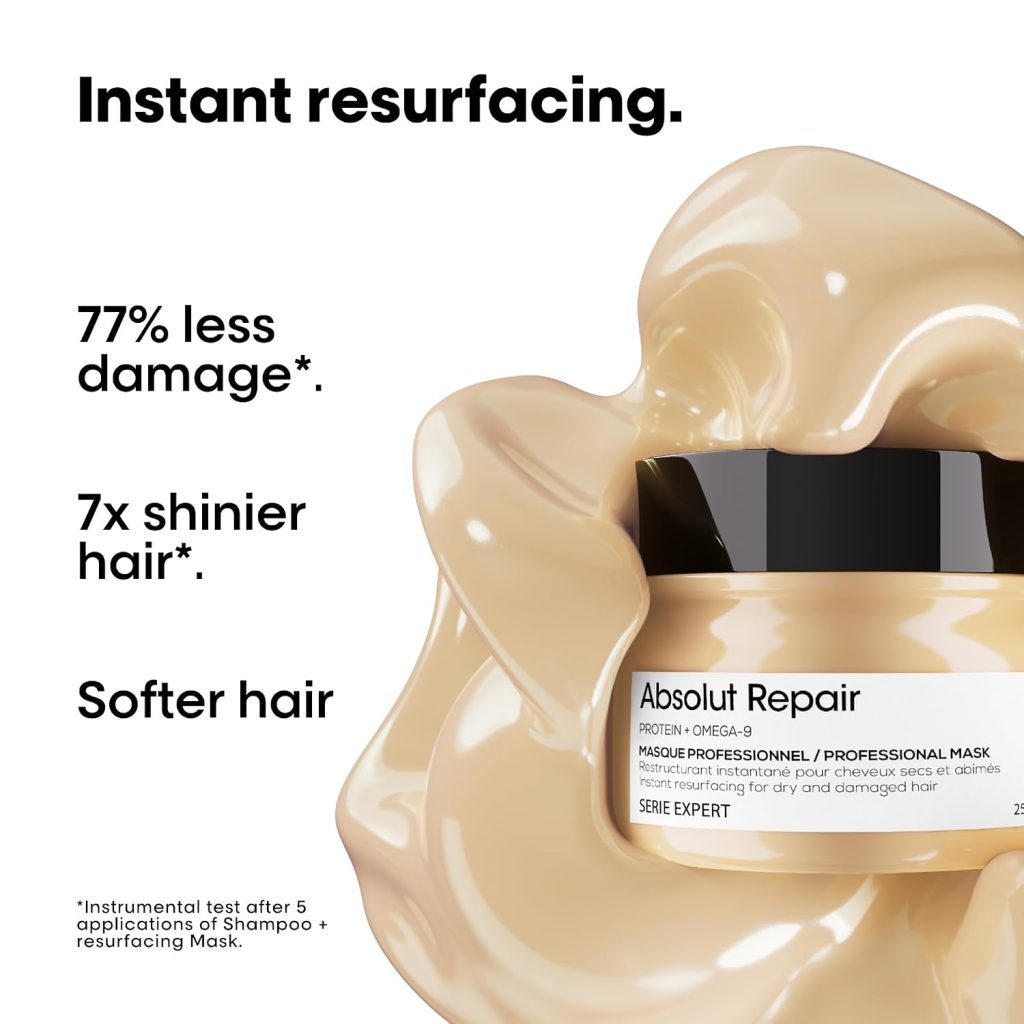
5. L’Oréal Professionnel Absolut Repair Hair Mask
Best salon-style protein mask
L’Oréal Professionnel Absolut Repair Hair Mask is designed for dry and damaged hair that needs nourishment, smoother texture, and added shine.
The product is part of L’Oréal Professionnel’s salon-focused Absolut Repair range. It uses a protein-treatment approach and is positioned as color-safe, making it appealing for people with dyed or professionally treated hair.
Compared with Dove, this mask offers a more premium salon-style experience. Compared with K18, it follows a traditional rinse-out format and focuses more on nourishment and cosmetic smoothness.
This is a strong option for people who want their hair to feel softer and look shinier without switching to a leave-in repair system. Fine hair users should apply it mainly to the mid-lengths and ends to avoid weighing down the roots.
Pros:
- Salon-style treatment
- Designed for dry and damaged hair
- Protein-based formula
- Helps improve softness and shine
- Color-safe positioning
- Suitable for weekly use
Cons:
- More expensive than drugstore masks
- May feel heavy if applied near the roots
- Protein treatments may not suit every hair type
- Requires rinsing
Best for: Dry, color-treated, damaged, or salon-processed hair needing a premium rinse-out mask.
Best Hair Masks by Category
Best overall for severe damage: K18 Leave-In Molecular Repair Hair Mask
Best for dry and curly hair: MAREE Deep Conditioning Hair Mask
Best for hydration and softness: amika Soulfood Nourishing Mask
Best affordable option: Dove Intensive Repair 10-in-1 Serum Mask
Best salon-style mask: L’Oréal Professionnel Absolut Repair Hair Mask
Best for bleached hair: K18 Leave-In Molecular Repair Hair Mask
Best for color-treated hair: L’Oréal Professionnel Absolut Repair Hair Mask
Buying Guide: How to Choose the Best Hair Mask
Choosing the best hair masks for damaged hair depends on your type of damage, hair texture, porosity, styling habits, and preferred application method.
For Bleached or Chemically Treated Hair
Choose a mask designed specifically for intensive damage. K18 is the strongest option in this list for hair affected by bleach, color, chemical services, and heat.
For Dry and Frizzy Hair
Choose a rich deep-conditioning mask. MAREE and amika are better suited to dryness, tangling, rough texture, and frizz.
For Fine Hair
Use a lightweight amount and focus on the mid-lengths and ends. Heavy masks may flatten fine hair if applied too close to the scalp.
K18 may work well because only a small amount is needed. Dove or L’Oréal can also work when applied carefully.
For Curly or Thick Hair
Curly and thick hair often needs more moisture and slip. MAREE and amika provide traditional rich conditioning textures that can make detangling easier.
For Color-Treated Hair
Look for color-safe products. K18, amika, MAREE, and L’Oréal Professionnel are all positioned for colored or processed hair.
For a Limited Budget
Dove provides the best value for regular use. It offers a large container and a straightforward damaged-hair treatment without premium pricing.
Repair Mask vs Moisturizing Mask
A repair-focused mask is intended for hair weakened by bleach, chemical processing, coloring, or heat. K18 and L’Oréal Professionnel are stronger choices for this purpose.
A moisturizing mask mainly improves dryness, softness, flexibility, and manageability. amika and MAREE are better options when moisture is the main concern.
Dove sits between these categories by offering affordable conditioning with damage-care positioning.
Hair can need both moisture and strengthening, but using too many protein-heavy products may make some hair feel stiff. Adjust your routine based on how your hair responds.
How to Use a Hair Mask Correctly
- Shampoo your hair thoroughly.
- Follow the specific product directions.
- Remove excess water before applying a rinse-out mask.
- Concentrate the product on the mid-lengths and ends.
- Avoid overapplying near the scalp.
- Leave the mask on for the recommended time.
- Rinse thoroughly unless it is a leave-in product.
- Use once or twice weekly unless instructed otherwise.
K18 follows a different method. Apply it to towel-dried hair after shampooing, skip conditioner, and wait four minutes before styling.
Final Verdict
If your hair has significant bleach, chemical, color, or heat damage, K18 Leave-In Molecular Repair Hair Mask is the best overall treatment.
If your hair is dry, curly, frizzy, or difficult to manage, MAREE Deep Conditioning Hair Mask offers a rich traditional conditioning experience.
If your main goal is hydration, softness, and shine, amika Soulfood Nourishing Mask is the strongest premium moisture option.
If you want an affordable mask for regular use, Dove Intensive Repair 10-in-1 Serum Mask provides the best value.
If you prefer a professional salon-style rinse-out treatment, L’Oréal Professionnel Absolut Repair Hair Mask is the best fit.
Overall, the best hair masks for damaged hair are the ones that match the cause of your damage. Choose K18 for intensive processing damage, MAREE for dry curls and frizz, amika for moisture, Dove for value, and L’Oréal Professionnel for salon-style care.
Frequently Asked Questions
What is the best hair mask for damaged hair?
K18 is the strongest option in this comparison for hair damaged by bleach, coloring, chemical processing, and heat. The best choice still depends on your hair type and level of damage.
Which hair mask is best for dry and frizzy hair?
MAREE and amika are the best options here for dryness, frizz, softness, and manageability.
Can I use a hair mask instead of conditioner?
Most rinse-out hair masks can replace conditioner on treatment days. K18 is different because its directions require shampooing, skipping conditioner, and applying the leave-in mask.
How often should I use a hair mask?
Many people use a rinse-out mask once or twice weekly. Follow the product instructions and reduce frequency if your hair feels heavy, coated, or stiff.
Which hair mask is best for bleached hair?
K18 is the most targeted option for bleached and chemically processed hair. L’Oréal Professionnel is a good traditional rinse-out alternative.
Are protein hair masks suitable for every hair type?
Not always. Some hair responds well to protein, while other hair may feel stiff or dry when protein products are overused. Balance protein care with moisturizing products.
Should I apply a hair mask to my scalp?
Most hair masks are intended mainly for the mid-lengths and ends. Applying a rich mask directly to the scalp may make the roots feel oily or heavy unless the product directions say otherwise.